Quick high-protein breakfasts you can make in minutes
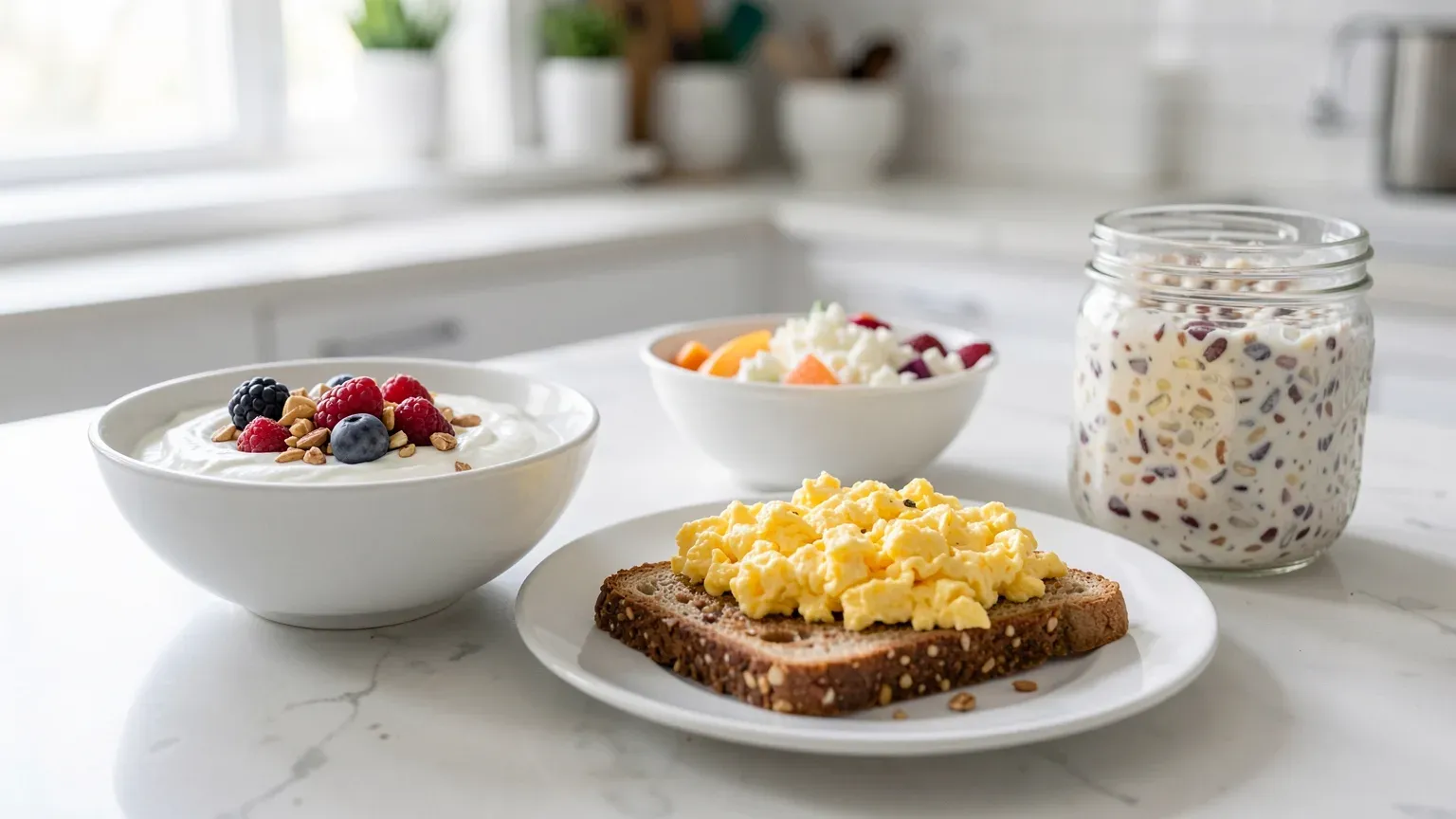
The alarm goes off late, the coffee is still brewing, and breakfast is whatever is closest. If you’d like that first meal to hold you until lunch, protein is a good place to start. The good news is that a breakfast with plenty of protein doesn’t have to take long. Here are quick ideas, with the protein in each, so you can pick one that fits your morning.
How much protein is “enough” at breakfast?
There’s no single number. The International Society of Sports Nutrition’s position stand on protein and exercise suggests spreading protein through the day, with about 20 to 40 grams at a meal for people who exercise. Your own needs depend on your size, your activity and your health, which we cover in how much protein you need a day. Treat the amounts below as a way to compare foods, not as a target you have to hit.
Eight quick options and what they hold
The figures come from the USDA’s FoodData Central (SR Legacy entries), for the portion named. They’re estimates: brands and sizes differ, so check the label on what you buy.
- Scrambled eggs. Two large eggs have about 12 g of protein (USDA). Add toast and a piece of fruit.
- A hard-boiled egg. One large egg has about 6 g (USDA). Boil a few at a time and keep them in the fridge for grab-and-go mornings.
- Plain Greek yogurt. A 170 g (6 oz) container of nonfat plain has about 17 g (USDA). Top it with berries and a few nuts.
- Cottage cheese and fruit. Half a cup of 2% cottage cheese has about 12 g (USDA). It’s good with sliced peaches or pineapple.
- Peanut butter toast. Two tablespoons of smooth peanut butter have about 7 g (USDA), on top of what the bread adds.
- Oats made with milk. Half a cup of dry rolled oats has about 5 g (USDA), so oats alone are a modest source. Cook them in a cup of 2% milk, which adds about 9 g (USDA), and stir in 2 tablespoons of peanut butter (about 7 g, as above) for roughly 21 g in the bowl. Mix the oats and milk the night before and you have overnight oats.
- Tofu scramble. Half a cup of regular tofu (about 124 g) has about 10 g (USDA). Crumble it into a pan with vegetables and your usual spices.
- A glass of milk on the side. One cup of 2% milk adds about 9 g, as above.
Build your own in a minute
Most quick breakfasts follow the same pattern, so you can mix and match:
- Start with a protein food: eggs, yogurt, cottage cheese, tofu, or a spoonful of nut butter.
- Add something with fiber: fruit, oats, or whole grain toast.
- Finish with a little extra if you like: nuts, seeds or a drizzle of honey.
Two examples that add up: Greek yogurt (about 17 g) with 2 tablespoons of peanut butter stirred in (about 7 g) gives you around 24 g. Two scrambled eggs (about 12 g) with half a cup of cottage cheese on the side (about 12 g) gives you around 24 g too.
Make mornings easier before they start
A little planning does most of the work. Boil eggs on the weekend, portion yogurt into small containers, or mix up a few jars of overnight oats. Our guide to meal prep for beginners has a simple routine, including how to store leftovers safely.
How Nutramigo can help
When you tell Nutramigo how much time you have to cook, it plans recipes to fit it, and it sizes each meal to your day’s calories and protein. If you eat the same breakfast most days, you can log it again in one tap, with the numbers from the first time (if you’ve chosen to see calories). You can read how Amigo plans your week on the home page.
When to talk to a professional
This is general information, not medical advice. If you have a health condition such as kidney disease, are pregnant, or are planning meals for a child, talk to your doctor or a registered dietitian before changing how much protein you eat.
Eggs, milk, peanuts, tofu (soy) and wheat are common food allergens. If you have a food allergy, read the label on everything you buy. Nutramigo leaves allergens out of your plan, but labels are the final check.