Meal prep for beginners: a simple weekly routine
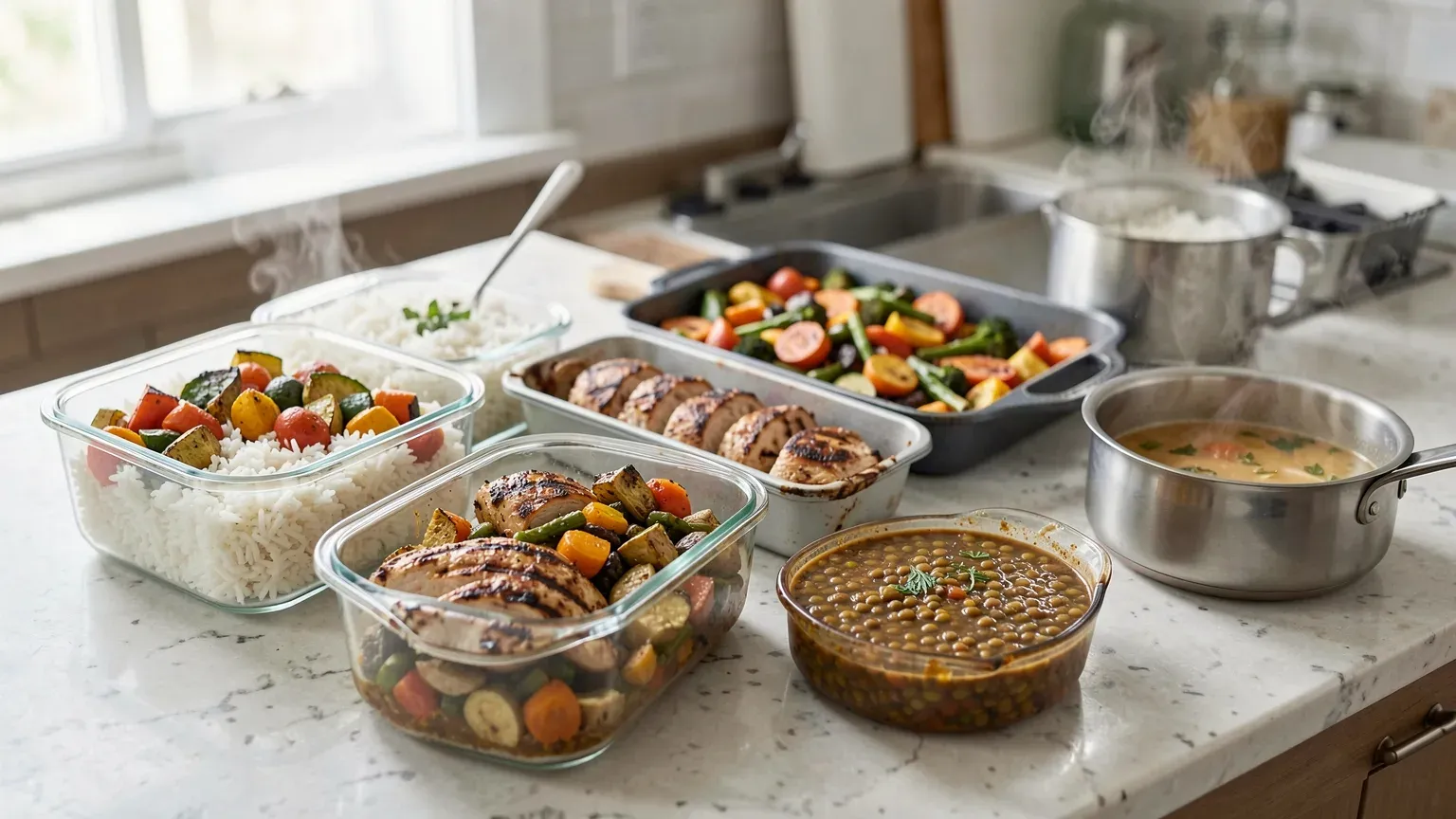
It’s Wednesday night, you’re tired, and the fridge holds nothing you can turn into dinner in ten minutes. Meal prep is the habit that fixes this: you cook a bit more on a day that suits you, and later meals are mostly done. You don’t need forty matching containers or a whole Sunday. Here’s a simple routine for getting started.
What meal prep is (and isn’t)
Meal prep just means doing some of the cooking ahead of time. It can be small:
- Batch cooking: one big pot of chili or a tray of roasted vegetables that covers several meals.
- Prepping parts: cooking a pot of rice, washing greens or chopping onions, then putting them together differently through the week.
- Cooking extra at dinner: making two servings and eating the second as tomorrow’s lunch.
You pick the level that fits your week. Starting with one or two meals is plenty.
A simple weekly routine
Try this for one week before changing anything.
- Choose a cooking day. Pick a day with an hour or two free. Cooking twice a week, say Sunday and Wednesday, means no meal waits more than a few days.
- Pick three or four recipes. For example: a pot of soup or stew, a tray of roasted vegetables with a protein, a grain such as rice or quinoa, and something for breakfast.
- Write your shopping list first. Add up what the recipes need so you shop once. Our post on making a grocery list from your meal plan shows how.
- Cook the long items first. Start whatever takes longest, like roasting or simmering, and chop and assemble the quick things while it cooks.
- Cool, pack and label. Divide the food into containers and note what it is and the day you cooked it.
Keep a few meals each week fresh. Prepping everything is how people get bored of meal prep and quit.
Keep it safe: cooling, storing and reheating
Cooking ahead only works if the food stays safe. The USDA’s Food Safety and Inspection Service has a page on leftovers and food safety, and these are its main points:
- Refrigerate within 2 hours of cooking (1 hour if the room is over 90°F). Bacteria grow quickly between 40°F and 140°F.
- Cool food fast. Divide large amounts into shallow containers. A big pot of soup takes a long time to cool, so split it into smaller containers.
- Cover or seal it. Airtight containers keep bacteria out and stop food picking up other smells.
- Eat it within 3 to 4 days, or freeze it. The USDA says leftovers keep 3 to 4 days in the refrigerator or 3 to 4 months in the freezer. Frozen food stays safe longer, but can lose moisture and flavor.
- Reheat to 165°F. Check with a food thermometer. Bring soups, sauces and gravies to a rolling boil, and cover the food so it heats all the way through.
A practical way to use the 3-to-4-day window: eat the earlier-cooked meals first, and freeze anything you won’t get to by about day three. A Sunday batch can cover Monday to Wednesday; for Thursday and after, cook again or pull something from the freezer.
Make it easier on yourself
- Cook things that reheat well. Soups, stews, curries, chili, roasted vegetables, grain bowls and cooked beans or lentils are all forgiving.
- Keep sauces and crunchy toppings separate. Add them at serving so nothing goes soggy.
- Pack single portions. They’re quicker to grab and reheat, and easier to freeze.
- Vary the flavor, not the work. The same chicken and rice can become a bowl one day and a wrap the next, and you can swap any meal in your plan when you tire of one.
- Start small. If a whole routine feels like a lot, prep just lunches for three days.
How Nutramigo helps with batch cooking
If you’d like your plan built around cooking less often, tell Amigo how you cook. In Profile, “How you cook” has three choices: Fresh (a different lunch and dinner every day), Leftovers (dinner makes a second serving for the next day’s lunch) and Batch (cook 2 or 3 times a week, each batch covering a few meals). Your next plan follows it. Because Nutramigo plans recipes to keep in the fridge for a few days, batch recipes include storage and reheating tips, and the plan shows which meal cooks a dish and which later meals eat it.
A note on safety and special cases
This is general information, not medical advice. If you’re pregnant, older, have a weakened immune system or a health condition, or you’re cooking for young children, ask your doctor or a registered dietitian whether extra food-safety care applies to you.
If you have a food allergy, read the label on every ingredient you buy. Nutramigo leaves allergens out of your plan and checks recipes for them, but labels are the final check, and that goes double when you cook a large batch to eat all week.