How much protein do you need a day?
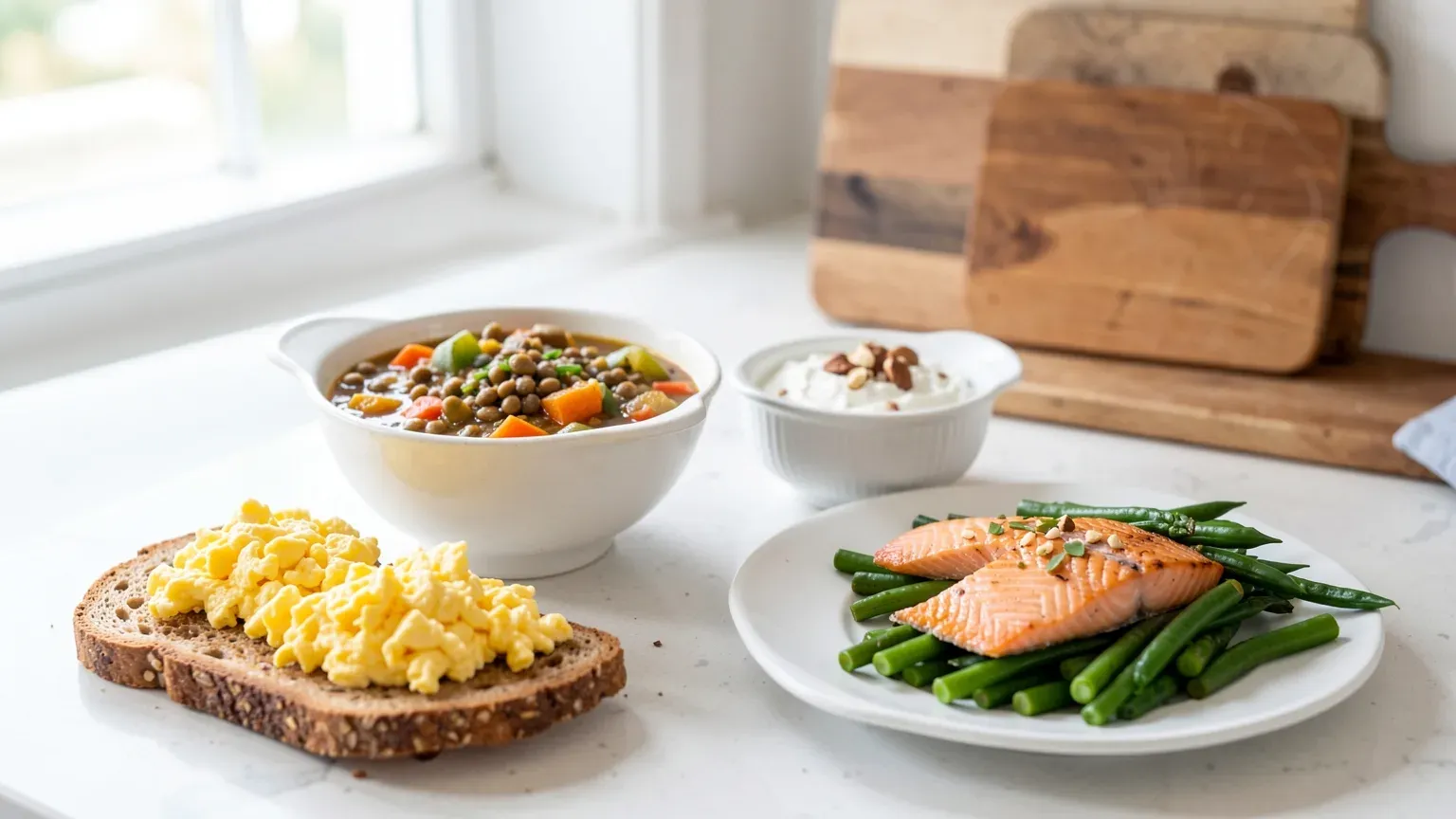
You see “30 g of protein” on a bar, “high protein” on a yogurt, and a friend who says you need twice that. So how much do you actually need? The short answer: it depends on your weight and how active you are. Here’s how to work out a number that fits you.
The official minimum: 0.8 g per kg
The National Academy of Medicine sets the recommended amount for adults at a minimum of 0.8 grams of protein per kilogram of body weight a day, according to the Harvard Nutrition Source. That’s just over 7 grams for every 20 pounds. For a 140-pound person, it works out to about 50 grams a day.
To find yours, divide your weight in pounds by 2.2 to get kilograms, then multiply by 0.8.
Two things to know:
- It’s a minimum, not a goal. Harvard’s page calls it “a minimum”, and says needs vary with age, exercise level, health conditions and your overall diet.
- There’s also a wide range that counts as acceptable. The Nutrition Source describes a wide acceptable range of 10% to 35% of your daily calories, which is a different measure from grams per kilogram. If you aren’t sure how many calories that is, start with how many calories you should eat a day.
When people aim higher
If you lift weights, run, or play sports, you may want more. The International Society of Sports Nutrition’s position stand on protein and exercise (Jäger and colleagues, 2017) says that for building and keeping muscle, a daily intake of 1.4 to 2.0 g per kg is enough for most exercising people. For a 70 kg (about 154 lb) person, that’s roughly 100 to 140 grams a day.
The same paper suggests spreading protein through the day, with about 0.25 g per kg, or 20 to 40 g, at a meal.
Notice the gap: 0.8 g is the minimum for adults, and the top of the sports range is about two and a half times that. Most of us land somewhere in between, depending on how much we move and what we want from our food.
Easy ways to get there
You don’t need powders or special foods. Fish, poultry, eggs, beans, lentils, nuts and tofu all have protein. A few habits make it simple:
- Build each meal around a protein. An egg dish at breakfast, beans or chicken at lunch, fish or tofu at dinner.
- Add it to snacks. Yogurt, nuts, or hummus with vegetables.
- Mix sources. Beans, lentils and nuts count too, so you can vary what’s on your plate.
Not sure what’s in your food? The USDA’s FoodData Central lists the protein in thousands of foods.
A worked example
Say you weigh 70 kg (about 154 lb) and you walk, cook and do a little exercise, but you don’t train hard. Your minimum is 70 × 0.8, or about 56 grams a day. If you start lifting weights three times a week, the sports range above (1.4 to 2.0 g per kg) gives you about 98 to 140 grams. Both are starting points, not scores. Your appetite, your budget and your doctor’s advice matter more than hitting an exact number.
What this looks like in Nutramigo
Nutramigo works out an estimated daily protein range from your body basics and your goal, and sizes your recipes to it. It’s a range, because needs aren’t one exact number. When you log a meal from a photo or a description, Amigo estimates the calories and protein, and if you show calories, you can see how your day compares with your target.
When to talk to a professional
This is general information, not medical advice. Some people need personal limits on protein. If you have kidney disease or another health condition, are pregnant, or are planning meals for a child, talk to your doctor or a registered dietitian before changing how much protein you eat. The Harvard Nutrition Source says people with certain conditions, such as kidney and liver disease, should follow their physician’s guidelines. The sports range above is for healthy adults who exercise, not for children or teens.
If you have a food allergy, read the label on every protein food you buy. Nutramigo leaves allergens out of your plan, but labels are the final check.