How to eat healthier without going on a diet
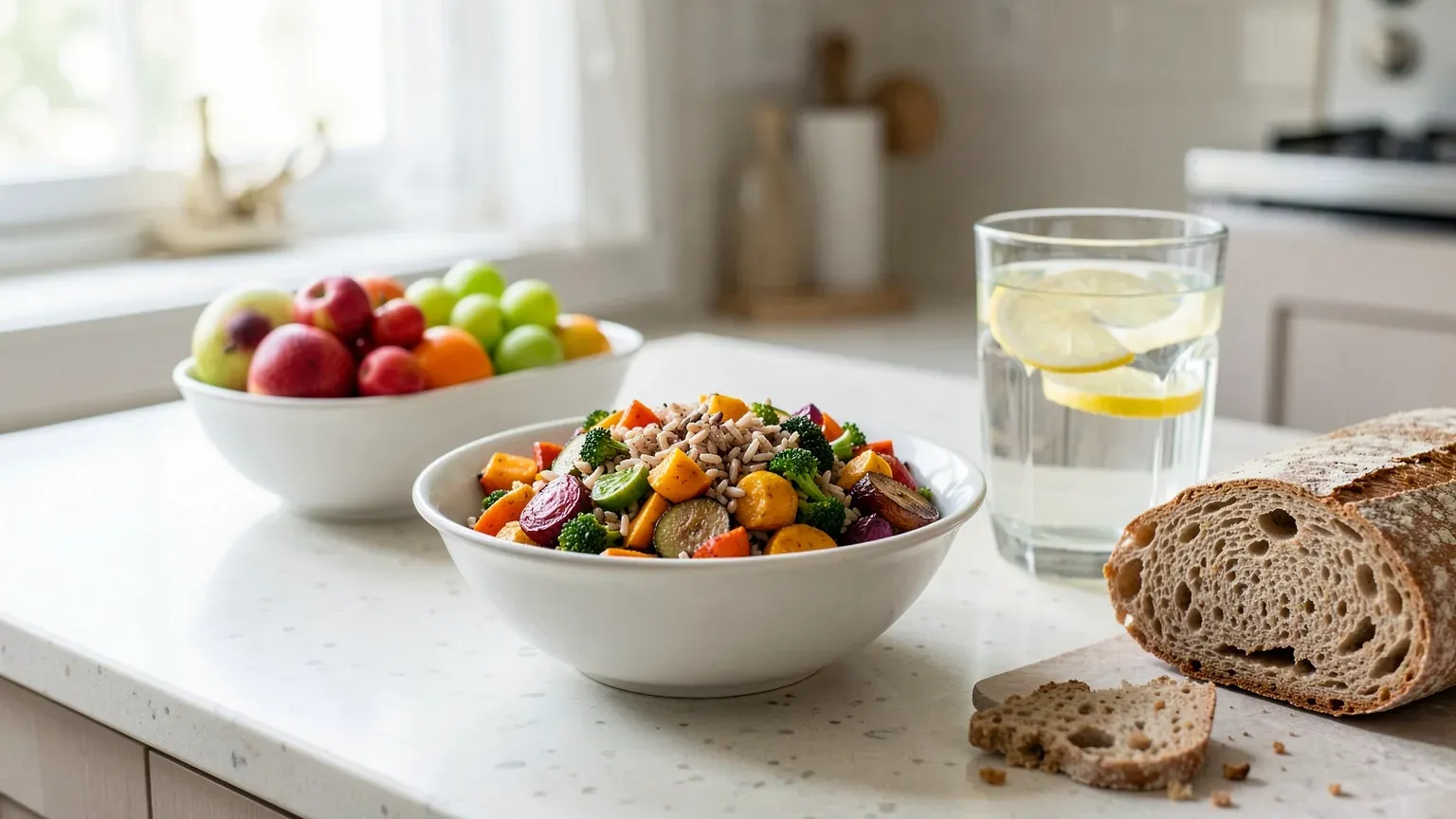
You’d like to eat better, but you don’t want a diet. No banned foods, no counting every bite, no starting over every Monday. Good news: eating healthier mostly comes from small changes you can keep. Here are five to try, with what the major health organizations say about each. Pick one, and add another when the first feels easy.
1. Add vegetables and fruit before you take anything away
Adding is easier than cutting. The World Health Organization suggests everyone over 10 aim for at least 400 grams of fruits and vegetables a day. The NHS puts it as 5 A Day: at least 5 portions in total, where a portion is 80 g. Fresh, frozen, canned and dried all count, so use whatever fits your budget and your week. (Potatoes and cassava don’t count, because they mainly provide starch.)
Easy places to start: a handful of spinach in eggs, frozen vegetables stirred into a pot of soup or pasta, fruit with your breakfast, or a bag of baby carrots next to your lunch.
2. Swap refined grains for whole grains when it’s easy
The Harvard T.H. Chan School of Public Health’s Healthy Eating Plate fills about half the plate with vegetables and fruit, and about a quarter with whole grains such as brown rice, whole-wheat bread or whole-grain pasta. It suggests limiting refined grains like white bread and white rice. You don’t have to switch everything. Try one swap this week, like whole-grain bread for your sandwiches.
3. Go easy on sugary drinks and added sugar
The WHO recommends keeping free sugars below 10% of your daily energy, and says less than 5% may bring extra benefits. Sweet drinks are a simple place to start, because they add sugar without filling you up. Harvard’s plate lists water, plus tea or coffee with little or no sugar, as its drinks, and limits juice to a small glass a day. A slice of lemon or a splash of fruit juice in sparkling water can make plain water more interesting.
4. Choose less processed food most of the time
Harvard’s plate suggests avoiding processed meats such as bacon, cold cuts and sausage, and limiting red meat. A practical way to get there is to build more meals from simple ingredients: beans, eggs, fish, chicken, vegetables, rice, oats. Packaged food still has a place. Use the label to compare options, and keep an easy meal on hand for the nights you’re tired.
5. Plan a little so healthy is the easy choice
Most “I’ll eat better” plans fall apart on a busy evening with nothing in the fridge. A short plan helps more than willpower. Our guide to meal prep for beginners shows a simple weekly routine, and swapping any meal in your plan means one dish you don’t like doesn’t derail the week.
What to skip
You don’t need to cut out food groups, follow a “cleanse,” or eat less than your body needs. If you’re not sure how much you should be eating, see how many calories you need a day. Nobody eats perfectly. A meal that wasn’t your best doesn’t undo the rest of the week, so there’s no need for guilt.
How Nutramigo can help
If you pick “Eat healthier” as your goal, Nutramigo asks what you’d like to focus on: more veg and fiber, less sugar, less processed food, heart health or more energy. You can choose as many as you like, and Amigo takes them into account when he plans your week. You can read how Amigo plans your week on the home page.
When to talk to a professional
This is general information, not medical advice. If you have a health condition, are pregnant, have a history of disordered eating, or are planning meals for a child, talk to your doctor or a registered dietitian before changing how you eat.
If you have a food allergy, read the label on everything you buy. Nutramigo leaves allergens out of your plan, but labels are the final check.