How to eat more fiber: easy swaps for every meal
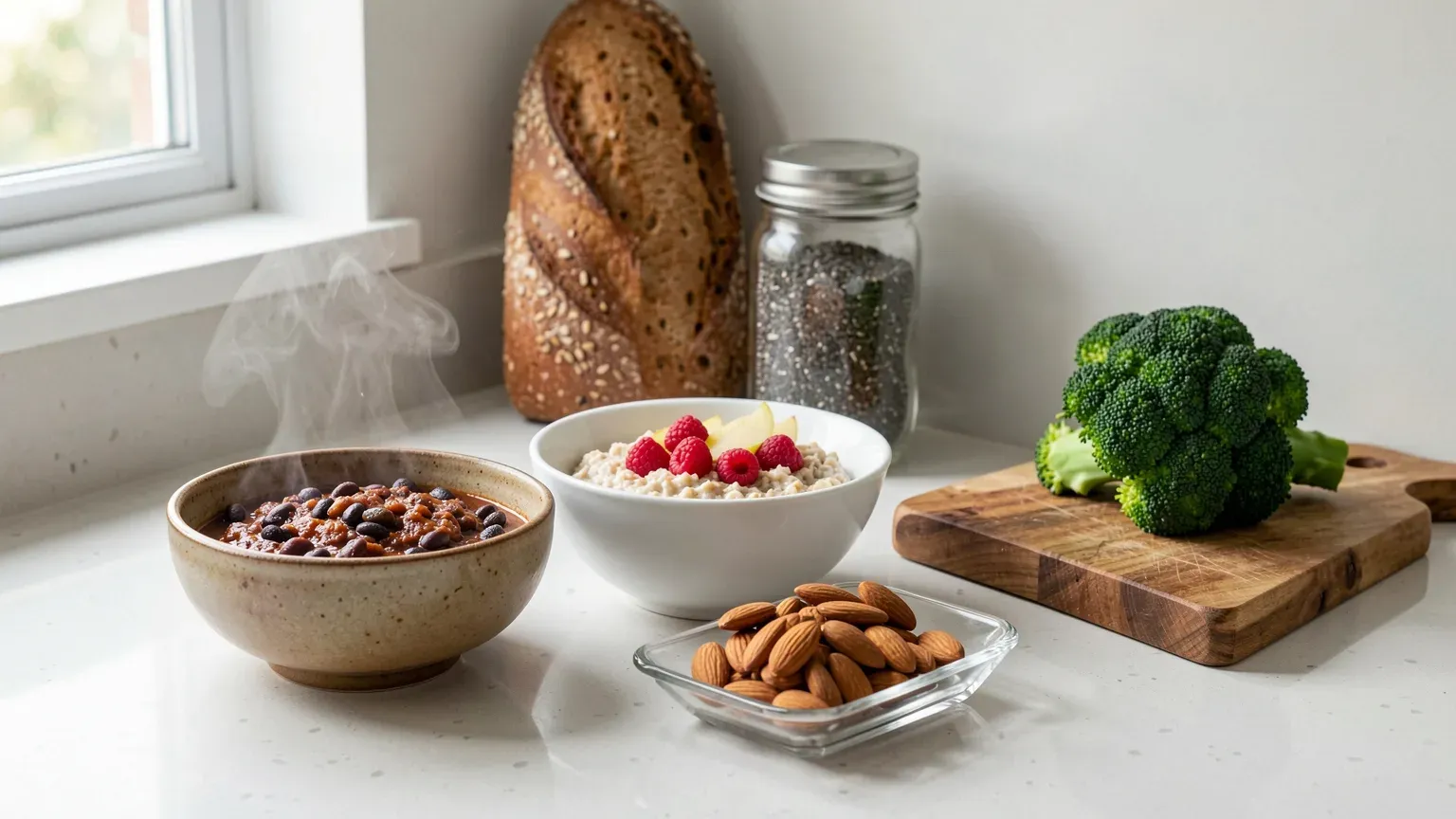
You’ve heard that fiber is good for you, but it’s hard to know how much you get, or where it comes from. The short version: most Americans get about half of what they need, and you can close much of that gap with a few everyday swaps. No supplements and no special products, just more of the plants you probably already like.
Why fiber matters
Fiber is the part of plant foods your body doesn’t fully digest. That’s exactly why it helps. The Harvard T.H. Chan School of Public Health’s Nutrition Source on fiber says it helps keep hunger and blood sugar in check, and links eating more of it with a lower risk of heart disease and type 2 diabetes. The NHS adds that it helps digestion and can help prevent constipation.
How much fiber do you need a day?
A few numbers you’ll see, all pointing the same way:
- 14 g for every 1,000 calories you eat. That’s the basis of the US recommendation, as the USDA’s Economic Research Service explains. It also notes that the 2020–2025 Dietary Guidelines for Americans called low fiber intake a public health concern.
- 28 g a day is the Daily Value the FDA uses for the “% DV” on food labels.
- 25 to 35 g a day for good health, according to Harvard, and 30 g a day for adults in the UK, according to the NHS.
And what we actually eat: the USDA found that Americans averaged 8.1 g per 1,000 calories in 2017–18, about 58% of the recommended amount. Harvard puts most Americans at about 15 g a day. So if you’re not sure, you’re probably below the mark, like most people.
You don’t need to count grams. Think of the numbers as a sense of scale: one more fiber-rich food at each meal goes a long way.
Foods with the most fiber
The figures below are estimates from the USDA’s FoodData Central (SR Legacy entries), for the portion named. Brands and sizes differ, so check the label on packaged foods.
| Food | Portion | Fiber, about |
|---|---|---|
| Black beans, cooked | ½ cup | 7.5 g |
| Lentils, cooked | ½ cup | 8 g |
| Chickpeas, cooked | ½ cup | 6 g |
| Raspberries | 1 cup | 8 g |
| Pear, with skin | 1 medium | 5.5 g |
| Apple, with skin | 1 medium | 4.5 g |
| Rolled oats, dry | ½ cup | 4 g |
| Chia seeds | 1 tablespoon | 4 g |
| Almonds | 1 ounce | 3.5 g |
| Broccoli, cooked | ½ cup | 2.5 g |
| Whole-wheat bread | 1 slice | 2 g |
Beans, lentils and chickpeas stand out. They’re also among the cheapest foods in the store, which is why they show up so often in meal planning on a budget.
Easy swaps, meal by meal
Pick one or two of these, not all of them at once.
Breakfast
- Oatmeal or a whole-grain cereal instead of a refined one. Harvard suggests choosing a cereal with a whole grain as the first ingredient.
- Berries or a sliced pear on top.
- A spoonful of chia seeds stirred into yogurt or overnight oats.
- Whole fruit instead of juice, as Harvard suggests.
Lunch
- Whole-wheat bread or a whole-wheat wrap for your sandwich.
- A can of beans or chickpeas, rinsed, tossed into a salad or soup.
- A piece of fruit or a handful of baby carrots on the side.
Dinner
- Swap some of the meat for beans or lentils in chili, tacos, soups and pasta sauce. Harvard suggests doing this two to three times a week.
- Brown rice, whole-grain pasta or barley instead of white.
- Potatoes with their skins on, as the NHS suggests.
- An extra handful of frozen vegetables in whatever you’re cooking.
Snacks
- Fruit, vegetable sticks, a small handful of nuts, or air-popped popcorn instead of chips.
- Hummus with carrots or whole-grain crackers.
Go slowly, and drink water
If you add a lot of fiber all at once, you may feel bloated or crampy for a while. Harvard suggests increasing it gradually and drinking more fluids as you do. Add one food this week, and another next week once your body has caught up.
Variety helps too. Different plants have different kinds of fiber, as Harvard explains, and the NHS suggests getting yours from a range of foods rather than relying on one. For more small changes like these, see how to eat healthier without going on a diet.
How Nutramigo can help
If you pick “Eat healthier” as your goal, Nutramigo asks what you’d like to focus on, and “More veg & fiber” is one of the options. Amigo takes it into account when he plans your week, and everything the week’s meals need goes on one grocery list. See how Amigo plans your week.
When to talk to a professional
This is general information, not medical advice. If you have a digestive condition such as IBS or inflammatory bowel disease, kidney disease, diabetes or another health condition, are pregnant, or are planning meals for a child, talk to your doctor or a registered dietitian before changing how much fiber you eat.
If you have a food allergy, read the label on everything you buy, including nuts, seeds and packaged whole-grain foods. Nutramigo leaves allergens out of your plan and checks recipes for them, but labels are the final check.